
- All
- Product Name
- Product Keyword
- Product Model
- Product Summary
- Product Description
- Multi Field Search

Views: 135 Author: Site Editor Publish Time: 2026-05-05 Origin: Site
Have you ever wondered why some materials feel stronger than steel, yet much lighter? It may seem surprising at first. But the answer is not magic—it is smart engineering. A composite material is not just a mix of substances. It is a carefully designed system where different materials work together to improve performance.
Today, composite materials are used almost everywhere. We see them in buildings, vehicles, electronics, and even sports equipment. They help products last longer, perform better, and stay efficient under stress.
In this article, you will learn what a composite material really is. We will explore how it is made, how it works, and why it matters in modern industries. By the end, you will have a clear and practical understanding of this important material.
A composite material is created by combining two or more distinct materials. These materials do not merge into one. Instead, they stay separate at a microscopic level while working together to improve performance. This structure allows each part to contribute its best property. One part may provide strength, while another offers flexibility or resistance. The result is a material that performs better than each component alone.
For example, fiberglass combines glass fibers and resin. Glass provides strength, while resin binds and protects it. Together, they create a durable and lightweight material used in many industries.
The goal is simple: use the strengths of different materials while reducing weaknesses. When engineers design a composite material, they carefully select components that complement each other. This approach allows materials to be tailored for specific needs. For instance, in construction, a material may need high compressive strength. In aerospace, weight reduction becomes the priority. Composite materials make both possible.
Traditional materials such as steel or aluminum are known for their consistent structure. Their properties remain the same throughout the material, which makes them predictable but also limits flexibility. In contrast, a composite material offers a more adaptable internal design, allowing engineers to adjust how it performs under different conditions.
To better understand the differences, see the comparison below:
Aspect | Traditional Materials (Steel, Aluminum) | Composite Material |
Structure | Uniform and consistent throughout | Layered or varied internal structure |
Property Control | Fixed properties | Can be engineered and adjusted |
Performance Under Stress | Limited adaptability | Designed for specific stress conditions |
Design Flexibility | Standard shapes and forms | Complex shapes and tailored structures |
Application Range | General-purpose use | Application-specific performance |
This structural difference gives composite materials a clear advantage in many modern applications, especially where performance and design flexibility are critical.
You probably use composite materials daily without noticing. Common examples include:
● Concrete used in buildings and roads
● Plywood used in furniture and construction
● Fiberglass products in tanks and panels
● Carbon fiber components in sports and transportation
These examples show that composite materials are not rare—they are essential.
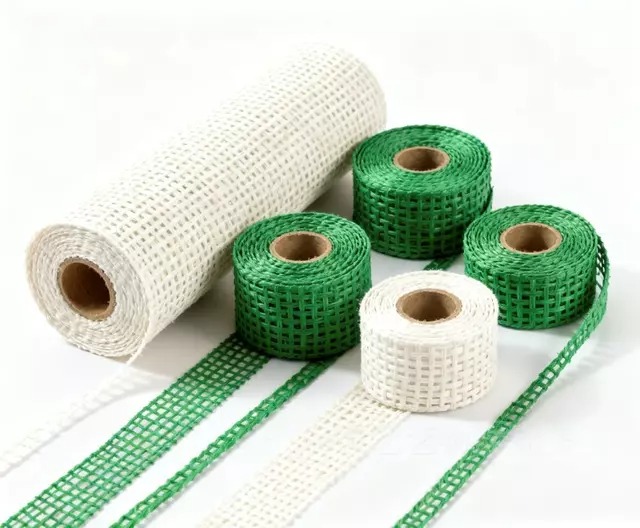
The matrix acts as the base material. It holds everything together and keeps the structure stable. It also transfers load between components. Common matrix materials include polymers, metals, and ceramics. Each type serves a different purpose. Polymer matrices are widely used because they are lightweight and easy to process.
Without the matrix, the reinforcement would not stay in place. It ensures the material behaves as a unified structure.
Reinforcement provides strength and stiffness. It is often made of fibers such as glass, carbon, or Kevlar. These fibers carry most of the load when the material is under stress.
A common example is Fiberglass Woven Cloth, which consists of interlaced glass fibers. This structure distributes force evenly and improves durability. It is widely used in construction, marine, and industrial applications.
The matrix and reinforcement do not compete—they support each other. The matrix keeps the reinforcement aligned and protected, while the reinforcement carries most of the mechanical load.
Here’s a simple comparison:
Element | Function | Result |
Matrix | Holds structure | Stability |
Reinforcement | Adds strength | Load resistance |
Combined | Works together | Higher performance |
This cooperation is what makes composite materials so effective.
One of the biggest advantages is the high strength-to-weight ratio. Reinforcement materials like glass or carbon fibers are strong but light. When combined with a suitable matrix, they create a material that performs well without adding weight.
This is why industries such as aerospace rely heavily on composite materials. Reducing weight improves fuel efficiency and overall performance.
Composite materials are highly customizable. Engineers can adjust fiber direction, layer thickness, and matrix type to achieve specific properties based on actual needs. This makes them suitable for a wide range of environments and performance goals.
For example, changing the weave pattern of Fiberglass Woven Cloth can affect flexibility and strength. This level of control allows manufacturers to meet precise requirements and optimize material behavior for different applications.
In industrial environments, efficiency and consistency are always key concerns. Manufacturers need materials that not only perform well but also simplify production processes. A composite material meets these needs by offering flexibility in design and efficiency in manufacturing.
To better understand its value in production, see the breakdown below:
Production Factor | How Composite Material Helps | Resulting Benefit |
Shape flexibility | Can be molded into complex forms | Fewer separate parts needed |
Assembly process | Reduces number of components | Faster and simpler assembly |
Product reliability | Integrated structures reduce weak points | More stable and durable products |
Material usage | Optimized design reduces excess material | Lower waste and better resource use |
Manufacturing efficiency | Streamlined production steps | Improved overall productivity |
This combination of design flexibility and production efficiency makes composite materials highly suitable for modern manufacturing systems.
Composite materials can be grouped into different types based on the matrix they use. Each type is designed for specific environments and performance needs. Some focus on lightweight structures, while others are built for strength, heat resistance, or durability in harsh conditions.
The table below highlights the main types and their key features:
Type of Composite Material | Key Characteristics | Common Reinforcement | Typical Applications |
Polymer matrix composite | Lightweight, versatile, easy to process | Fiberglass, carbon fiber, Fiberglass Woven Cloth | Construction panels, tanks, automotive parts |
Metal matrix composite | High strength, good wear resistance, retains metal properties | Ceramic particles, fibers | Automotive components, industrial machinery |
Ceramic matrix composite | Excellent heat resistance, corrosion resistance | Ceramic fibers, carbon | Aerospace engines, high-temperature systems |
Each type serves a different purpose. Polymer matrix composites are widely used because they balance cost and performance. Metal matrix composites are chosen when durability and strength are critical. Ceramic matrix composites are ideal for extreme environments where heat and corrosion resistance are required.
Composite materials are essential in aircraft and vehicles. They reduce weight while maintaining strong structural integrity. This balance helps improve fuel efficiency and overall performance. It also allows engineers to design more advanced and aerodynamic structures.
Many modern aircraft rely heavily on composite structures. These materials are used in fuselages, wings, and interior components, helping reduce operational costs and improve long-term performance.
In construction, composite materials provide strength and durability. Concrete, reinforced panels, and engineered wood are common examples used in modern building systems. These materials help structures handle heavy loads and environmental stress more effectively.
They also improve resistance to weather, corrosion, and long-term wear. As a result, buildings and infrastructure can last longer and require less maintenance over time.
Composite materials are widely used in circuit boards, protective housings, and sports equipment. They offer insulation, durability, and flexibility, which makes them suitable for many applications.
In industrial and consumer products, they also support lightweight design and consistent performance. This helps improve usability while maintaining strength and reliability in everyday use.
Manufacturers play a key role in advancing composite technology. LEEBO, established in 2002, focuses on producing stitchbond fabrics and improving production processes.
Their work helps enhance reinforcement materials used in composite structures, contributing to better performance and reliability.
Sustainability is becoming more important in manufacturing. LEEBO integrates recycled polyester fibers and energy-saving processes into production.
These efforts reduce environmental impact while maintaining product quality. It reflects a broader shift toward sustainable composite material solutions.
Note: Choosing suppliers with proven environmental practices can improve both product quality and brand reputation.

In modern design, materials are no longer chosen only for availability or cost. A composite material is now used as a tool to achieve specific performance goals. Instead of adapting designs to fit materials, engineers design materials to fit the application.
Aspect | Traditional Approach | Composite Material Approach |
Material role | Passive choice | Active design tool |
Product design | Limited by material properties | Driven by performance goals |
Weight control | Difficult to optimize | Precisely adjustable |
Strength efficiency | Fixed performance | Tailored strength and durability |
Overall performance | Standard output | Optimized for efficiency |
This shift allows designers to create products that are lighter, stronger, and more efficient, while meeting specific functional requirements.
As industries seek better performance and sustainability, demand for composite materials continues to grow. They offer solutions that traditional materials cannot match, making them essential in modern design and manufacturing.
Tip: When selecting a composite material, focus on performance requirements first, then match the matrix and reinforcement accordingly.
A composite material is a smart combination of different materials working together to deliver better performance. By using a matrix and reinforcement, it provides strength, light weight, and flexibility that single materials cannot easily achieve. This makes it highly useful in many industries where performance and efficiency matter.
From construction to transportation and electronics, composite materials support modern design and production. They help improve durability, reduce weight, and allow more flexible product development. As technology advances, these materials continue to improve in both performance and sustainability.
Companies like LEEBO Environmental Protection Materials Co., Ltd. play an important role in this progress. Through advanced production processes and high-quality reinforcement materials, they help create reliable and efficient composite solutions. Their focus on innovation and environmental responsibility ensures that composite materials deliver long-term value across various applications.
A: A composite material is made by combining two or more distinct materials so they work together for better strength, lower weight, or improved durability. It usually includes a matrix and a reinforcement.
A: A composite material is typically made of two main parts: a matrix and a reinforcement. The matrix holds the structure together, while the reinforcement adds strength and stiffness.
A: A composite material can be stronger because each part has a specific role. The reinforcement carries much of the load, and the matrix supports it, which helps the material perform more efficiently.
A: Composite material is used in construction, transportation, electronics, sports equipment, and industrial products. It is popular in places where low weight and high strength both matter.
A: Fiberglass Woven Cloth is not usually the final composite by itself. It is a reinforcement material used inside a composite material, often combined with resin to create strong laminated products.
A: Fiberglass Woven Cloth helps improve strength, stability, and load distribution. It is widely used because it is practical, reliable, and suitable for many molded or layered composite products.


