
- All
- Product Name
- Product Keyword
- Product Model
- Product Summary
- Product Description
- Multi Field Search

Views: 141 Author: Site Editor Publish Time: 2026-04-27 Origin: Site
Why do so many modern industries move away from traditional materials? The answer often points to one solution: composite material. It offers a smart mix of strength, low weight, and durability, which many single materials cannot match on their own.
Today, engineers and manufacturers need materials that help them build lighter, stronger, and longer-lasting products. From aerospace to construction, composite solutions meet these needs in practical ways. Companies like LEEBO, which work with products such as Fiberglass Woven Cloth, show how innovation keeps pushing this field forward. In this article, we will discuss the main advantages of composite materials. You will learn why they matter, where they perform best, and why so many industries choose them.
One of the most important advantages of a composite material is its high strength-to-weight ratio. It delivers comparable or even superior strength to metals while remaining much lighter. This means structures can maintain integrity without carrying unnecessary mass.
In practical terms, this allows engineers to design lighter systems without compromising safety. For example, fiberglass-based composites are widely used in structural panels and load-bearing components where strength matters but weight must stay low. This balance is critical in transportation and infrastructure.
Weight reduction directly affects performance in many industries. When we reduce weight, systems require less energy to operate. This leads to better fuel efficiency and faster movement.
Application Area | Benefit from Lightweight Composite Material |
Vehicles | Consume less fuel during operation |
Aircraft | Carry more payload without higher cost |
Equipment | Easier to transport and handle |
In automotive design, lighter vehicles improve acceleration and handling. In aerospace, every kilogram saved leads to long-term savings. Composite material helps achieve these goals without sacrificing strength.
Unlike many traditional materials, composite materials resist fatigue effectively. They can endure repeated loading and unloading cycles without losing their structural properties.
This makes them ideal for applications where components face continuous stress, such as aircraft wings, wind turbine blades, and industrial machinery. Materials like Fiberglass Woven Cloth contribute to this durability by distributing stress evenly across the structure, reducing the risk of cracks or failure.
Unlike metals, composite material does not behave the same in all directions. Engineers can control how it reacts by adjusting fiber orientation.
● Fibers aligned in one direction improve tensile strength
● Cross-layered fibers increase overall stability
● Layer stacking improves resistance to complex loads
This flexibility allows us to design materials based on real-world needs. It reduces waste and improves efficiency in production.
Composite materials offer high stiffness, which helps maintain shape under pressure. This is important in applications where dimensional stability is critical, such as aerospace panels or precision equipment.
They resist bending and deformation, even under heavy loads. This stability ensures consistent performance and reliability across long periods of use.
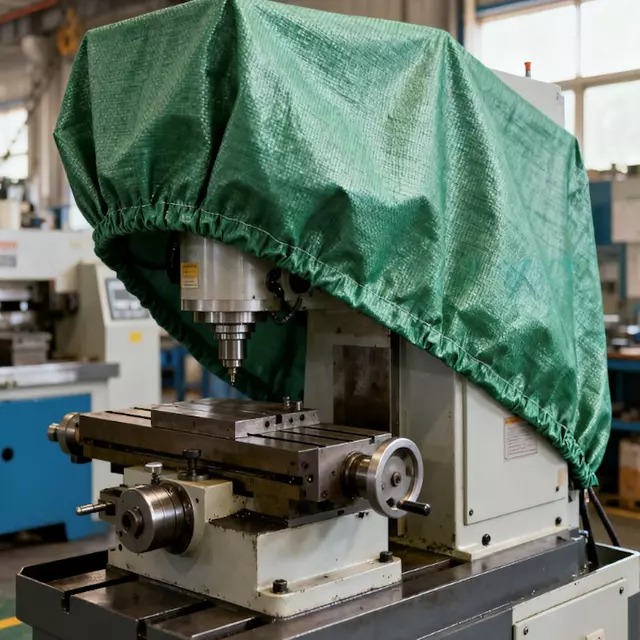
Composite materials do not rust like metals. They resist corrosion from water, chemicals, and environmental exposure, making them suitable for harsh conditions.
Industries such as marine, chemical processing, and oil and gas rely on composite material solutions because they maintain integrity over time. This reduces replacement frequency and improves safety.
Exposure to sunlight, rain, and temperature changes can degrade traditional materials. Composite materials, however, are designed to withstand these conditions. They maintain their appearance and performance even after long-term outdoor use. This makes them ideal for construction elements such as roofing panels, facades, and structural supports.
Temperature changes can cause expansion and contraction in many materials. Composite materials can be engineered to minimize these effects. This property is essential in high-precision applications such as aerospace or electronics, where even small dimensional changes can impact performance. Manufacturers like LEEBO also emphasize environmentally responsible production and certified standards, ensuring that composite materials meet both performance and sustainability expectations.
Note: Choosing the right resin system plays a key role in thermal performance, especially in high-temperature environments.
Composite materials can be molded into complex shapes that are difficult or impossible to achieve with traditional materials. This allows designers to create aerodynamic and efficient structures.
For example, curved panels, integrated housings, and streamlined components are easier to produce using composite material processes. This flexibility reduces design limitations and opens new possibilities.
Composite material allows designers to combine several functions into a single part. This reduces the need for extra components and simplifies the overall structure. Instead of assembling many small pieces, we can create one integrated solution that performs multiple roles efficiently.
Design Feature | Practical Benefit | Impact on Performance |
Fewer joints | Reduces weak points in the structure | Improves overall structural integrity |
Less assembly required | Minimizes production steps and labor time | Speeds up manufacturing efficiency |
Integrated component design | Combines multiple functions into one single part | Lowers maintenance and failure risk |
This approach helps streamline production while improving reliability. It also reduces the chance of mechanical failure, since fewer connections and joints are involved in the final structure.
By adjusting fiber type, orientation, and matrix composition, engineers can create a composite material tailored to exact requirements. Fiberglass Woven Cloth is a good example. It can be layered and oriented to achieve desired strength, flexibility, or insulation properties. This customization makes composites highly versatile across industries.
Composite materials are known for their long service life. They resist wear, fatigue, and environmental damage better than many traditional materials. In infrastructure projects, this means structures can last for decades with minimal degradation. In consumer products, it ensures reliability and long-term performance.
Maintenance plays a big role in total cost. Composite material reduces this burden significantly.
Feature | Composite Material | Traditional Materials |
Corrosion Resistance | High | Moderate to Low |
Maintenance Frequency | Low | High |
Lifespan | Long | Medium |
Manufacturers such as LEEBO focus on quality control and advanced production systems. Their approach ensures consistent performance and long-term reliability.
Tip: When selecting a composite material, consider lifecycle cost rather than initial price. Long-term savings often outweigh upfront investment.
In aerospace, weight reduction directly impacts fuel consumption and payload capacity. Composite materials allow aircraft to fly more efficiently while maintaining strict safety standards. Even small weight savings can lead to significant cost reductions over time.
They are widely used in wings, fuselage sections, and interior components to improve performance, durability, and aerodynamic efficiency.
The automotive industry uses composite materials to produce lighter and more efficient vehicles. This leads to better fuel economy, lower emissions, and improved overall driving performance. Designers also benefit from greater flexibility, allowing for more innovative vehicle structures, smoother shapes, and modern aesthetics that were difficult to achieve before.
In construction, composite materials offer strong resistance to moisture, pests, and environmental damage. They are commonly used in bridges, roofing systems, wall panels, and structural reinforcements. These materials extend the lifespan of buildings, improve safety, and reduce long-term maintenance requirements in demanding environments.
From sports equipment to electronics, composite materials improve performance and user experience. Lightweight and durable products are easier to handle and more comfortable to use.
They also provide better balance, strength, and long-term reliability, making them ideal for high-performance and everyday consumer applications.
Composite material manufacturing offers a unique balance between precision, efficiency, and flexibility. Modern production methods allow manufacturers to maintain consistent quality while adapting to different production scales. The following table highlights how key manufacturing approaches contribute to better outcomes.
Manufacturing Aspect | Process Description | Core Benefit |
Advanced production techniques | Automated fiber placement and resin transfer molding | High precision and consistent quality |
Near-net-shape manufacturing | Produces parts close to final shape | Reduces machining and material waste |
Flexible production capability | Supports both custom and large-scale production | Meets diverse demand without quality loss |
These capabilities allow composite material production to stay efficient while meeting both specialized and high-volume requirements.
Composite materials provide excellent strength without the heavy weight of metals. This makes them ideal for applications where efficiency is critical and weight reduction is a priority.
They help improve performance in industries like aerospace and automotive, where lighter structures lead to better energy use and overall system efficiency.
Unlike wood or untreated metals, composite materials resist moisture, chemicals, and environmental damage. They do not rust, rot, or degrade easily under harsh conditions. This ensures consistent performance over time, even in challenging environments such as marine, industrial, and outdoor applications.
Composite materials allow engineers to design products without traditional limitations. They can be molded into complex shapes and integrated structures.
This leads to more efficient, functional, and visually appealing solutions that meet modern engineering and design demands.

Composite material brings together strength, low weight, and long-term durability. It helps industries improve performance while reducing energy use and maintenance needs. Its resistance to corrosion and flexible design make it useful across aerospace, automotive, and construction fields. Materials like Fiberglass Woven Cloth support stable structure and reliable performance in demanding conditions. When produced by experienced companies such as LEEBO Environmental Protection Materials Co., Ltd., these materials offer consistent quality and strong environmental value through advanced processes and responsible production.
Choosing a composite material means more than replacing traditional options. It allows us to build smarter, design freely, and achieve better efficiency over time.
A: A composite material combines two or more distinct substances to create better performance than a single material alone. It often uses a matrix and reinforcement, such as Fiberglass Woven Cloth, to improve strength, durability, and stability.
A: Composite material is valued because it offers lightweight strength, corrosion resistance, and design flexibility. These benefits help industries improve efficiency, reduce maintenance, and extend product life.
A: It reduces overall weight while keeping strong structural support. This helps aircraft, vehicles, and equipment move more efficiently and perform better under load.
A: In many cases, yes. Composite material often provides better weight efficiency and stronger resistance to moisture, chemicals, and weather than wood or metal. It also allows more design freedom.
A: Fiberglass Woven Cloth is used as a reinforcement layer. It helps distribute stress, improve stiffness, and support long-term durability in many composite structures.
A: Yes. Although initial costs can vary, composite material often lowers lifecycle costs because it lasts longer and needs less maintenance.


