
- All
- Product Name
- Product Keyword
- Product Model
- Product Summary
- Product Description
- Multi Field Search

Views: 187 Author: Site Editor Publish Time: 2026-03-30 Origin: Site
Have you ever wondered how everyday fabrics stay strong and wrinkle-free? Many of them rely on polyester fiber, a material used across clothing and industry. From soft garments to durable products like Coarse Denier Nonwoven Fabric and Stitchbonded Fabric, it plays a key role in modern production. So how does polyester fiber move from simple chemicals to finished material? This process may seem complex, yet it follows a clear and structured path. Each stage builds on the previous one to shape its final properties.
In this article, you will learn how polyester fiber is made step by step. We will explore polymerization, melt spinning, drawing, and finishing. You will also see how manufacturers like LEEBO improve efficiency and production quality.
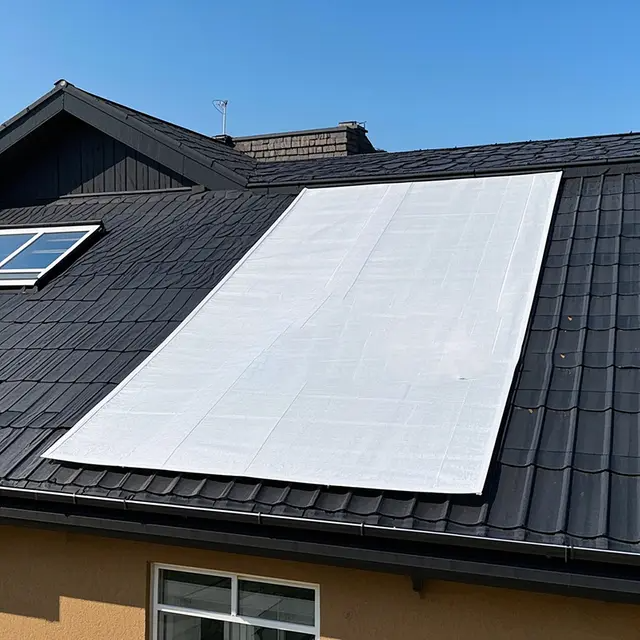
Polyester fiber is a synthetic material made from a polymer known as polyethylene terephthalate (PET). It forms when chemical compounds react under controlled heat and pressure to create long molecular chains. These chains give the fiber its structure and strength.
Most polyester fiber comes from petroleum-based sources. However, newer processes also allow the use of recycled plastics or plant-based raw materials. Regardless of the source, the final polymer structure remains similar, ensuring consistent performance across applications.
The production process defines how polyester fiber performs in real applications. During manufacturing, molecules align in a controlled way. This alignment creates strength and flexibility at the same time. It also improves resistance to moisture and wrinkles.
Below is a simple comparison showing how processing steps influence properties:
Manufacturing Stage | Effect on Polyester Fiber | Result in Application |
Polymerization | Builds molecular chains | Determines base strength |
Spinning | Shapes fiber form | Controls thickness and texture |
Drawing | Aligns molecules | Improves durability and elasticity |
Finishing | Adds functionality | Enhances usability in textiles |
We can see that every step plays a role. It is not just about making fiber. It is about shaping performance from the inside out.
The two main ingredients in polyester fiber production are terephthalic acid (PTA) and ethylene glycol (EG). These chemicals react to form PET, the base polymer.
PTA provides the rigid structure of the polymer chain, while EG adds flexibility. Together, they create a balanced material that can be processed into strong and adaptable fibers. The quality of these inputs directly affects the final fiber performance.
Besides PTA, some processes use dimethyl terephthalate (DMT) as an alternative raw material. Additionally, bio-based ethylene derived from plants like sugarcane is becoming more common.
Recycled polyester is also gaining attention. Manufacturers can reuse plastic bottles and convert them into polyester fiber, reducing reliance on virgin materials. This approach supports both efficiency and resource optimization in modern production systems.
Before polymerization begins, raw materials must be purified and prepared. Even small impurities can disrupt reactions or weaken the final fiber.
Manufacturers carefully control temperature, pressure, and chemical ratios during preparation. This ensures that the feedstock entering the next stage is stable and consistent. For large-scale production, this step is critical for maintaining uniform fiber quality across batches.
Polymerization starts with esterification, where PTA reacts with ethylene glycol. This reaction produces intermediate molecules called oligomers and releases water as a byproduct.
This stage sets the foundation for the polymer structure. If reaction conditions are not stable, the resulting material may have uneven properties. That is why precise control of heat and catalysts is essential.
In the next step, oligomers undergo polycondensation. This process links them into long polymer chains, forming PET. As the chains grow, the material becomes stronger and more suitable for fiber production.
The length of these chains, known as molecular weight, plays a key role. Higher molecular weight usually leads to stronger polyester fiber, while lower values may reduce durability.
At this stage, manufacturers monitor viscosity, temperature, and reaction speed. These factors determine how well the polymer can be processed later.
Modern facilities, including those operated by LEEBO, use advanced equipment and automated systems to maintain stable conditions. This ensures consistent polymer quality, which is essential for producing high-performance polyester fiber across different applications.
Note: Stable polymer quality at this stage reduces defects in later processes and improves overall production efficiency.
Once PET is formed, it is cooled into chips and later remelted into a thick liquid. This molten material resembles honey in texture.
Before spinning, it passes through fine filters to remove impurities. Clean melt ensures smooth extrusion and prevents defects such as uneven fibers or breakage during spinning.
The molten polymer is then pushed through a spinneret, a metal plate with tiny holes. As it exits, it forms long, continuous filaments.
The size and shape of these holes determine the thickness and cross-section of the polyester fiber. This step allows manufacturers to customize fibers for different uses, from fine textiles to heavy-duty materials like Coarse Denier Nonwoven Fabric.
As the filaments leave the spinneret, they are rapidly cooled using air or liquid. This cooling process solidifies the fibers and locks in their basic structure.
At this point, the fibers are still relatively weak and smooth. They need further processing to achieve the strength and texture required for practical applications.
Melt spinning is the core of polyester fiber manufacturing. It transforms liquid polymer into usable fibers in a continuous process.
Small changes in temperature, pressure, or flow rate can affect fiber quality. That is why precise control during this stage is essential for producing uniform and reliable materials.
After spinning, the fibers are stretched in a process called drawing. This aligns the molecular chains along the fiber axis.
Aligned molecules create stronger bonds, which significantly improves tensile strength and elasticity. Without drawing, polyester fiber would remain weak and unsuitable for most applications.
Next, the fibers are crimped to introduce waves or bends. This step adds bulk and improves cohesion when fibers are spun into yarn.
Crimped fibers perform better in textiles because they trap air and increase softness. This is especially useful in products like Stitchbonded Fabric, where structure and flexibility are important.
Heat setting stabilizes the fiber after drawing and crimping. The fibers are heated under controlled conditions to lock in their shape.
This improves resistance to heat and deformation. It also ensures that the fibers maintain their dimensions during further processing and use.
Depending on the application, continuous filaments may be cut into shorter lengths known as staple fibers. These resemble natural fibers like cotton and are easier to spin into yarn.
Different lengths are used for different purposes. Short fibers work well in apparel, while longer ones may be used in industrial materials.
To enhance performance, polyester fiber often undergoes surface treatments. These may include anti-static finishes, antibacterial coatings, or dye-enhancing processes.
Such treatments allow the fiber to adapt to a wide range of applications. For example, improved dye absorption makes polyester more suitable for fashion textiles.
Quality control ensures the fiber meets required standards. Manufacturers test strength, uniformity, and consistency at multiple stages.
Below is a simplified overview of key checks:
Quality Check | Purpose | Impact |
Tensile strength test | Measures durability | Ensures fiber can handle stress |
Uniformity analysis | Checks thickness consistency | Improves fabric appearance |
Defect inspection | Identifies flaws | Reduces waste and rework |
Companies like LEEBO apply strict quality systems and follow international standards. This approach helps maintain reliable performance across large-scale production.
Tip: Strong quality control early reduces processing issues later.
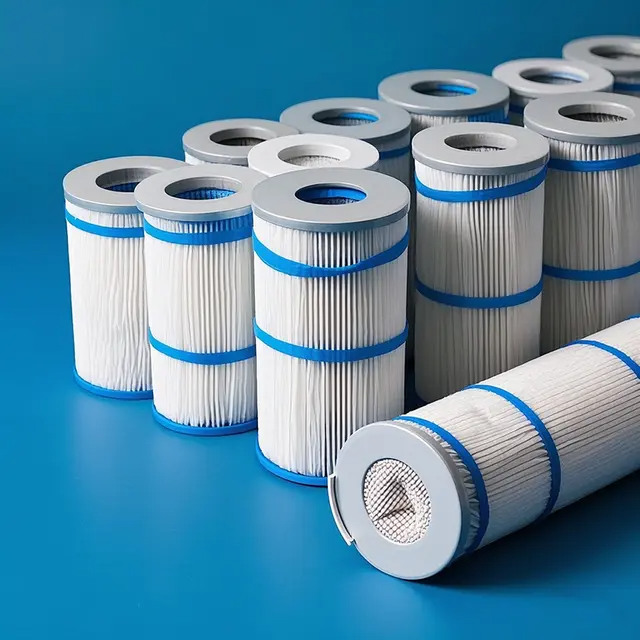
Polyester fiber can be produced in several forms, including filament, staple, tow, and fiberfill. Each type has unique characteristics suited for different uses.
Filament fibers are smooth and continuous, while staple fibers are short and fluffy. Tow consists of bundled filaments, and fiberfill is designed for volume and insulation.
Different forms of polyester fiber serve different industries. Apparel uses fine filaments for smooth fabrics, while home textiles often use staple fibers.
Industrial applications rely on stronger structures. For example, Coarse Denier Nonwoven Fabric is used in construction and filtration, while Stitchbonded Fabric is widely applied in reinforcement and lining materials.
Polyester fiber production follows a precise and controlled process from start to finish. It begins with chemical reactions and moves through melt spinning, drawing, and finishing. Each step shapes the fiber’s strength, flexibility, and final performance. These stages work together to turn simple raw materials into reliable textile solutions used across many industries.
The result is a versatile material that adapts to both everyday and industrial needs. Manufacturers continue to improve this process through innovation and better technology. LEEBO Environmental Protection Materials Co., Ltd. stands out by combining advanced production systems and strict quality control. Its polyester-based products deliver consistent performance, making them suitable for applications like nonwoven and stitchbonded materials while supporting efficient and sustainable production.
A: Polyester fiber is made from chemical compounds like terephthalic acid and ethylene glycol. These materials react to form PET, which becomes the base for many products, including Coarse Denier Nonwoven Fabric.
A: Polyester fiber production includes polymerization, melt spinning, drawing, and finishing. Each stage shapes the fiber’s strength and flexibility, making it suitable for applications like Stitchbonded Fabric.
A: Polyester fiber is popular because it offers durability, wrinkle resistance, and cost efficiency. These qualities make it useful in both clothing and industrial materials.
A: Melt spinning determines the shape and consistency of polyester fiber. Proper control ensures uniform filaments, which are essential for products like Coarse Denier Nonwoven Fabric.
A: Filament polyester fiber is continuous and smooth, while staple polyester fiber is cut into short lengths. Staple fibers are often used in yarns and textile blends.
A: Polyester fiber is widely used in industrial materials such as Stitchbonded Fabric. Its strength and stability make it ideal for reinforcement, filtration, and construction uses.


