- All
- Product Name
- Product Keyword
- Product Model
- Product Summary
- Product Description
- Multi Field Search

Views: 129 Author: Site Editor Publish Time: 2026-06-12 Origin: Site
Choosing the right building reinforcement fabric is not only about comparing price or basis weight. In construction systems, fabric often serves as a functional layer inside waterproofing membranes, repair assemblies, backing systems, flooring structures, insulation panels, and other composite products. For that reason, building reinforcement materials should be assessed as engineered components rather than ordinary textile inputs.
The performance of building reinforcement materials depends on the combination of fiber type, structure, thickness, tensile behavior, and surface compatibility. A reinforcement nonwoven fabric used in membrane support works under very different conditions from a construction base fabric used in drainage or repair layers. Selecting suitable building reinforcement materials therefore requires a clear understanding of both application demands and processing conditions.
● Building reinforcement materials should be selected according to end use, structural role, bonding system, and processing method.
● Different building reinforcement materials vary in fiber type, construction, thickness, and dimensional stability.
● Woven, nonwoven, and stitchbonded structures are suitable for different reinforcement and backing applications.
● A reinforcement nonwoven fabric should be reviewed by tensile behavior, roll consistency, and surface compatibility, not only by GSM.
● Before bulk sourcing, technical data, tolerances, and sample-to-bulk consistency should be confirmed together.
Building reinforcement fabric refers to a textile or textile-like layer used to improve support, crack control, dimensional stability, or bonding performance within a construction system. Unlike decorative fabrics, it is designed to perform a mechanical function inside a membrane, panel, repair layer, or composite assembly. In many cases, building reinforcement materials work as internal support components that strongly influence long-term performance.
These materials may be woven, nonwoven, stitchbonded, or otherwise engineered for different targets. A building fabric layer used in roofing may require flexibility and coating acceptance, while another used in wall systems may need openness and lightweight support. Because of this, building reinforcement materials should be defined by function rather than appearance alone.
Ordinary textile fabric is usually selected for appearance, comfort, or coverage, while reinforcement fabric is chosen for technical performance. In construction, the material often needs to resist handling stress, maintain width stability, and remain consistent across large rolls. These demands place building reinforcement materials in a much more specification-driven category.
Another difference is system integration. A high strength nonwoven or woven support layer may later be combined with adhesive, resin, coating, or membrane structures. As a result, building reinforcement materials must be evaluated as part of a complete layered system rather than as standalone sheet goods.
Building reinforcement fabric is commonly used in waterproofing membranes, roofing underlayers, flooring systems, insulation backing, drainage composites, and repair-related structures. Depending on the design, the fabric may function as a reinforcement base, separator, stabilizer, or support carrier. Many building reinforcement materials are also selected for applications requiring stable roll-form conversion.
A reinforcement nonwoven fabric may be chosen for cushioning, breathability, or coating support, while a woven structure may be chosen for better directional stability. In every case, the material should match the mechanical and bonding conditions of the final product. That is why building reinforcement materials are usually reviewed together with the end-use environment.
One key function of building reinforcement materials is improving structural behavior inside layered systems. When embedded in coatings, repair layers, or membrane assemblies, the fabric can distribute stress and reduce local weak points. This becomes especially important where crack control and dimensional stability must be maintained over time.
In many thin-layer systems, the fabric is not the sole load-bearing element, but it improves how the assembly responds to movement and stress. A properly selected construction base fabric can make the finished system more balanced during both installation and service. That is why building reinforcement materials often play an outsized role compared with their thickness.
Modern construction products are usually multi-layer systems rather than single materials. Roofing, waterproofing, flooring, and wall assemblies often combine several components that need to work together reliably. In these systems, building reinforcement materials act as interface layers that receive coatings, support lamination, or reinforce bonding structures.
If a building fabric layer is too loose, too dense, or too unstable, it can create problems during coating, cutting, or lamination. For that reason, building reinforcement materials influence not only end-use performance but also conversion stability during production.
Construction materials must often balance technical performance with practical handling. A high strength nonwoven or stitchbonded structure can provide support and bulk without excessive stiffness or mass. This makes many building reinforcement materials suitable for roll-based processing, transport, and installation planning.
Handling behavior also affects waste and efficiency. Materials that wrinkle, stretch unevenly, or show thickness variation can interrupt processing and field application. Stable building reinforcement materials are therefore preferred not only for strength, but also for repeatable handling performance.
Glass fiber fabrics are widely used because they offer a practical balance of strength, thermal stability, and cost efficiency. They are often considered for membrane reinforcement, insulation-facing systems, and applications requiring dimensional support. Among common building reinforcement materials, glass-based options are frequently chosen where both mechanical performance and structural consistency are required.
Their suitability still depends on treatment and downstream system design. A glass-based building fabric layer may work well in one coating system and perform poorly in another if bonding compatibility is weak. Glass fiber building reinforcement materials should therefore be matched carefully to the intended process and service environment.
Polyester-based fabrics are often selected where lightweight structure, cost control, and flexible handling are priorities. They appear in backing systems, construction base fabric applications, and support layers that need dimensional consistency without excessive rigidity. In many product categories, polyester remains one of the more adaptable building reinforcement materials.
Its final performance depends on how the fibers are formed and bonded. A polyester reinforcement nonwoven fabric may offer cushioning and openness, while another synthetic sheet may be better for surface stability or lamination support. Synthetic building reinforcement materials should therefore be compared by structure and application role rather than polymer name alone.
Aramid, carbon, basalt, and similar advanced fiber systems are used in more specialized applications with higher mechanical demands. These materials may be selected when lower elongation, stronger reinforcement, or greater resistance is required. Compared with standard building reinforcement materials, they are usually more application-specific.
Because of their higher performance potential, selection requirements are also stricter. Surface treatment, orientation, thickness control, and bonding behavior all become more important. For these reasons, advanced building reinforcement materials are normally evaluated with closer attention to technical consistency.
Woven structures are usually preferred where higher directional stability and organized yarn alignment are required. Their interlaced pattern provides more defined tensile behavior and a firmer reinforcement base. Among building reinforcement materials, woven options are often used where dimensional control is a priority.
They also work well when predictable orientation is needed within the system. However, woven materials may be less bulky and less adaptable than some nonwoven forms. As a result, woven building reinforcement materials are not always ideal for applications requiring softness, openness, or cushioning.
Nonwoven structures are commonly chosen when flexibility, breathability, cushioning, or process adaptability are more important than tightly organized yarn geometry. A reinforcement nonwoven fabric can be engineered for thickness, porosity, bulk, or surface behavior in ways that standard woven fabric may not easily achieve. This gives nonwoven building reinforcement materials broad use across layered construction products.
They are also well suited to wide-format roll production and composite conversion. A high strength nonwoven may serve as a support layer, backing, separator, or membrane carrier depending on its design. Because of this versatility, nonwoven building reinforcement materials are common in waterproofing, insulation, flooring, and drainage products.
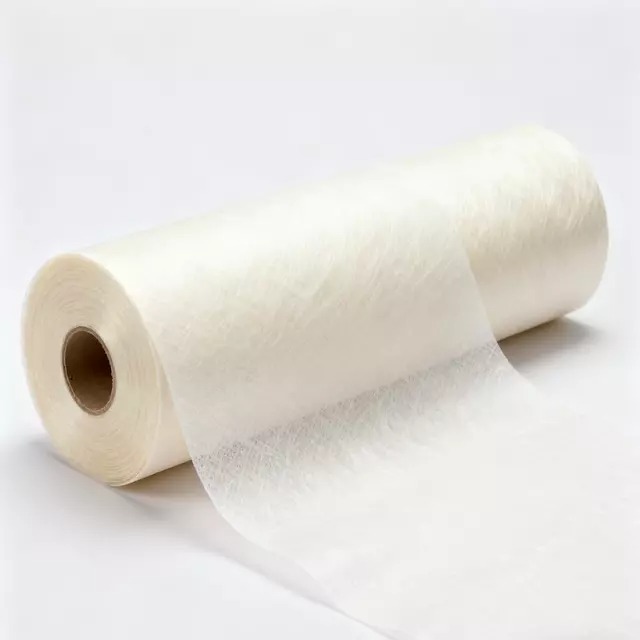
Stitchbonded structures combine a fiber web with stitched reinforcement, allowing the material to remain open and bulky while gaining added stability. This is useful where the fabric must stay workable in roll form while still supporting downstream processing. Within the broader group of building reinforcement materials, stitchbonded options fit especially well in applications requiring both openness and mechanical organization.
They are often considered for construction base fabric uses, support layers, and composite systems that require good width consistency. Compared with a loose web, stitchbonded fabric is generally better suited to feeding, cutting, lamination, and coating processes. That gives stitchbonded building reinforcement materials a practical edge in many production settings.
Fiber type influences tensile behavior, thermal performance, flexibility, and cost, while structural design determines how those properties appear in the final sheet. Whether the product is a woven support layer, reinforcement nonwoven fabric, or stitchbonded construction base fabric, building reinforcement materials should always be reviewed by fiber-and-structure combination.
The same raw material can behave very differently depending on processing method. One polymer may become an open support layer in one design and a tighter reinforcement structure in another. For that reason, comparing building reinforcement materials by appearance alone often leads to poor decisions.
GSM is often the first number requested, but it does not fully define performance. Thickness, density, and compression response determine whether the sheet behaves more like a cushion layer, separator, support carrier, or reinforcement base. In practice, building reinforcement materials with similar basis weight may still perform very differently.
Density balance matters especially in coating and lamination applications. If a building fabric layer is too dense, flexibility and integration may be reduced; if it is too open, consistency may suffer. Good building reinforcement materials need a balance that suits the final system rather than a single target number.
Tensile properties should be checked in both machine and cross directions, especially when the fabric will face stress during unwinding, coating, transport, or installation. A material with poor directional balance may distort or tear even when its GSM looks acceptable. That is why building reinforcement materials need a broader mechanical review.
Surface compatibility is equally important. If the fabric must receive adhesive, resin, or coating, the surface condition directly affects final performance. Roll consistency, edge quality, and width control also remain critical when building reinforcement materials are supplied for continuous production use.
Material Type | Common Strengths | Typical Construction Uses |
Glass fiber fabric | Strength, thermal stability, dimensional support | Membrane reinforcement, insulation backing |
Polyester fabric | Lightweight, flexible, cost-efficient | Backing layers, support fabrics, composites |
High strength nonwoven | Bulk, cushioning, breathability | Flooring, underlayers, membrane support |
Stitchbonded fabric | Stability with open structure | Construction base fabric, backing, lamination support |
Advanced fiber fabric | Higher reinforcement performance | Specialized structural and technical systems |
In waterproofing systems, the fabric often acts as an internal reinforcement base that supports coating distribution and stress balance. The most suitable building reinforcement materials for these uses usually combine tensile stability, surface compatibility, and controlled thickness. If the structure is too unstable or too dense, membrane integration may become less reliable.
A reinforcement nonwoven fabric may work well where flexibility and coating acceptance are both required. In other cases, a more structured fabric may be preferred for stronger dimensional control. The right building reinforcement materials should reflect both membrane chemistry and expected system movement.
Repair-related applications often require a building fabric layer that can support thin sections while remaining manageable during placement. In such systems, the material can improve stress distribution and support a more balanced assembly after installation. Suitable building reinforcement materials should therefore combine support function with workable thickness and surface consistency.
Panel structures and backing systems also depend on stable roll-form materials. A construction base fabric used behind insulation or within a composite element must remain consistent over long production runs. For these uses, building reinforcement materials should be reviewed not only by strength but also by conversion performance.
In drainage and flooring systems, the fabric may provide separation, cushioning, filtration, or limited support. Here, the best building reinforcement materials are not always the heaviest or strongest, but the ones that match the actual role of the layer. A high strength nonwoven with suitable openness may outperform a denser structure when fluid movement or resilience is required.
The same logic applies to underlayer products. Materials should be selected according to compression response, cutting behavior, and handling stability rather than a single specification point. Effective building reinforcement materials for flooring and drainage need a balanced combination of bulk, stability, and process control.
Evaluation Point | What to Confirm | Main Risk if Ignored |
Fiber and structure | Woven, nonwoven, or stitchbonded suitability | Mismatch with application |
GSM and thickness | Range, tolerance, density balance | Uneven functional performance |
Tensile behavior | MD/CD strength and elongation | Tearing or distortion |
Surface compatibility | Adhesive, coating, lamination fit | Bonding failure |
Width and roll consistency | Stable feeding and cutting behavior | Production loss and waste |
Sample-to-bulk match | Consistency between approval and supply | Quality variation in bulk orders |
Choosing the right building reinforcement fabric requires more than a simple comparison of weight or price. The most suitable building reinforcement materials are selected by matching fiber type, structure, thickness, tensile behavior, and bonding compatibility to the actual function of the final construction system. Whether the application involves membrane support, backing layers, repair assemblies, or separation structures, a technical review should be completed before bulk sourcing decisions are made.
For projects requiring reinforcement nonwoven fabric, construction base fabric, or stitchbonded support materials with controlled weight, width, and structure, LEEBO can provide application-oriented textile support based on technical specifications.
Building reinforcement materials are used in waterproofing systems, roofing layers, flooring understructures, insulation backing, drainage composites, and repair-related applications. Their role may include reinforcement, separation, support, cushioning, or surface stabilization depending on system design. The exact material should be selected according to structural demands and processing conditions.
Woven reinforcement fabric uses interlaced yarns and is usually selected for more defined directional stability and organized tensile behavior. Nonwoven reinforcement fabric is made by bonding or reinforcing fibers into a sheet and is often used where flexibility, bulk, openness, or process adaptability are needed. Among building reinforcement materials, the right choice depends on the application rather than a fixed preference for one structure.
Stitchbonded fabric combines an open fiber web with stitched reinforcement, creating a stable material without becoming overly dense. This makes it suitable for backing, membrane support, composite layers, and other roll-form applications that require both handling stability and structural organization. In many cases, stitchbonded building reinforcement materials offer a practical balance of bulk, flexibility, and processing consistency.