- All
- Product Name
- Product Keyword
- Product Model
- Product Summary
- Product Description
- Multi Field Search

Views: 0 Author: Site Editor Publish Time: 2026-08-03 Origin: Site
Automotive engines and HVAC systems breathe thousands of cubic feet of air every minute. This massive airflow requires precise, continuous filtration. The primary media effectively captures dust, pollen, and road debris. However, it lacks the inherent structural strength to stand alone under intense aerodynamic loads.
Choosing an inadequate support fabric compromises the entire filter assembly. Poor material selection causes media collapse and increases pressure drop. It strains engine intakes and overworks cabin HVAC blowers. Furthermore, flimsy backing materials jam automated pleating machines. This failure causes severe manufacturing downtime and unacceptable scrap rates.
This article provides an evidence-based framework for evaluating and shortlisting support materials. We explore different material categories, critical testing criteria, and hidden processing risks. You will learn how to select the ideal automotive air filter support layer for robust, continuous manufacturing.
The ideal support layer balances maximum mechanical stiffness with minimal airflow resistance (pressure drop).
Coarse denier nonwovens offer superior pleatability and thermal stability compared to standard spunbond alternatives.
Material selection must be evaluated alongside manufacturing constraints, specifically bonding compatibility and rotary pleating tolerances.
Supplier shortlists should prioritize IATF 16949 compliance, lot-to-lot consistency, and verifiable permeability data.
Engine and cabin air filters experience aggressive, fluctuating air pressures. During rapid acceleration, the engine pulls a massive vacuum. This suction forces incoming air against the filter face. The support layer must prevent the primary media from ballooning or collapsing. Without a rigid structural skeleton, the delicate primary fibers stretch and tear. Repeated flexing causes premature fatigue. The filter fails long before reaching its expected mileage limit.
Engineers face a constant trade-off between rigidity and porosity. The backing must be rigid enough to hold pleats perfectly open. Open pleats maximize the available surface area for air to pass through. Yet, the material must remain highly porous. If the fabric restricts airflow, it creates a high pressure drop. High pressure drop reduces vehicle fuel efficiency. It also forces cabin HVAC blower motors to work much harder. You must find a fabric balancing structural strength and maximum air permeability.
Filter performance issues directly impact production lines. Rotary pleating machines demand materials possessing uniform stiffness. Flimsy or inconsistent fabrics fail to hold a sharp crease. They snag on production blades. They wander off the feeding tracks. This jamming halts the entire assembly line. Operators waste hours clearing jams and recalibrating machinery. Materials lacking consistent stiffness result in unacceptably high scrap rates.
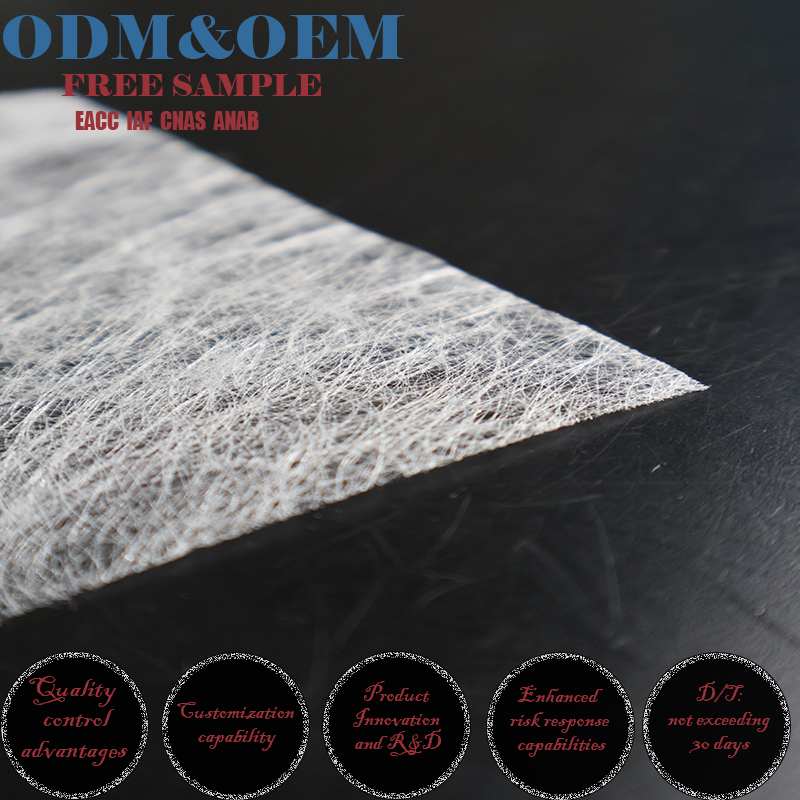
Mechanism: This technology uses significantly thicker synthetic fibers. During production, these thick fibers interlock to create a highly rigid, highly porous matrix. The robust fiber diameter provides intense structural strength while leaving large open spaces for air.
Pros: A premium coarse denier nonwoven delivers an exceptional stiffness-to-weight ratio. It boasts excellent heat resistance for engine bay environments. It retains excellent pleat memory after folding. It naturally supports modern deep-pleat filter designs.
Cons: These fabrics often carry a higher initial material cost per square meter compared to basic commodity textiles.
Mechanism: Manufacturers produce this fabric through continuous filament extrusion. Fine polyester threads spin out and bond together into a uniform flat sheet.
Pros: Spunbond PET offers excellent visual uniformity. It provides a highly cost-effective solution for standard or economy cabin air filters. It works well in low-stress environments.
Cons: Standard spunbond delivers lower overall mechanical stiffness. It easily deforms in high-moisture conditions. It softens in high-heat engine environments unless heavily treated chemically.
Mechanism: This represents the traditional metallic backing method. Manufacturers crimp or expand metal sheets and bond them to the filter media.
Pros: Wire mesh provides maximum rigidity. Heavy-duty industrial or commercial vehicle applications frequently rely on this extreme strength.
Cons: Metal backing adds significant weight. It readily oxidizes and rusts in humid environments. Sharp metal edges frequently damage processing equipment. Finally, metallic composites prove exceptionally difficult to dispose of sustainably.
Filter Backing Material Options Compared
Material Category | Mechanical Stiffness | Airflow Resistance | Heat Tolerance |
|---|---|---|---|
Coarse Denier Nonwoven | Very High | Very Low | Excellent |
Standard Spunbond PET | Moderate | Low to Moderate | Moderate |
Expanded Metal / Wire | Maximum | Very Low | Excellent |
Stiffness dictates the long-term success of any filter design. Engineers measure this characteristic using standard Taber stiffness or Gurley stiffness tests. The testing equipment flexes the material and measures the precise resistance force. You must verify the material can maintain a sharp crease. The fabric needs strong memory-retaining properties. When the machine folds the fabric, the individual fibers must bend cleanly without fracturing. Fractured fibers weaken the structure and release lint into the airstream.
Airflow resistance testing is mandatory. Laboratories establish a clear baseline using the Frazier method or the ISO 9237 standard. This test measures how many cubic feet of air pass through one square foot of fabric per minute. The backing must absolutely not act as a secondary bottleneck to the primary air filter nonwoven fabric. Highly permeable support layers ensure optimal engine aspiration and quiet HVAC operation.
Engine bays expose filters to extreme conditions. You must evaluate fabric performance under sustained high temperatures. Engine filters routinely face operating temperatures exceeding 135°C (275°F). The fibers cannot soften or melt at these levels. Furthermore, the material requires broad chemical resistance. It will encounter unburned automotive fluids, engine oil mist, extreme ambient humidity, and vaporized road salts. Chemical degradation destroys stiffness rapidly.
Every filter housing imposes strict physical constraints. Engineers analyze the delicate balance between structural strength and the physical footprint. We measure the material's mass in grams per square meter (GSM). A higher GSM typically increases strength but also increases thickness. If the backing material is too thick, you cannot fit the required number of pleats into the plastic frame. Target specific GSM ranges aligning perfectly with your housing specifications.
Recommended Testing Sequence:
Conduct initial GSM and thickness measurements.
Perform Gurley stiffness tests in both machine and cross directions.
Measure air permeability using ISO 9237 protocols.
Subject samples to 135°C oven aging for 96 hours.
Retest stiffness and permeability to calculate degradation.
Joining the primary filtration media to the support skeleton requires thermal energy or adhesives. You must assess how your chosen filter backing material reacts during manufacturing. Factories utilize hot melt adhesives, ultrasonic welding, or heated calendering rollers. The melting point of the support fabric must align with the primary media.
Common Mistake: Incompatible melting points create weak bonds. If the support layer resists melting while the primary media scorches, the layers will separate. This delamination destroys the filter during vehicle operation.
Automated production lines require flawless raw materials. Master rolls of backing fabric must exhibit perfect uniform tension. The edges must be slit perfectly straight. Any variance causes immediate manufacturing headaches.
Common Mistake: Accepting rolls exhibiting camber (curvature) or tension variance. These defects cause the material to wander laterally as it enters the rotary pleater. Material wandering creates uneven filter packs. It forces operators to scrap entire batches and halt the machine.
Many heavy-duty filter designs utilize phenolic resin-treated primary media. This specialized media requires thermal curing in large ovens. The completely assembled filter pack passes through these intense heat zones. The backing material faces severe thermal stress here. It must possess strict dimensional stability. Shrinkage must remain well below 1-2 percent. If the backing shrinks excessively, the entire assembled filter pack warps. A warped filter cannot seal correctly inside the vehicle airbox.
Begin by distinctly segmenting your end-use application. An engine intake filter demands high heat tolerance, high burst strength, and resistance to harsh fluids. Conversely, a cabin filter faces completely different demands. Cabin filters focus on supporting delicate odor-absorbing carbon layers or anti-allergen media. They experience much lower heat profiles. Clearly define these parameters before evaluating any automotive filtration fabric.
Never rely solely on a technical data sheet (TDS). A TDS represents controlled laboratory conditions. Real-world manufacturing introduces tension, speed, and heat variables. Demand master roll samples from your prospective suppliers. Run a full pilot pleating trial on your own factory equipment. Evaluate how the material handles folding, cutting, and adhesive application.
The automotive industry demands rigorous quality control. Look closely at supplier credentials before making purchasing decisions. Shortlist manufacturers actively holding IATF 16949 or ISO 9001 certifications. These specific certifications guarantee the supplier utilizes standardized quality management systems. They ensure the factory properly documents its raw materials and testing procedures.
The best material fails if it arrives late. Evaluate the logistical realities of your chosen supplier. Compare local manufacturing lead times against imported shipping schedules. Clarify the Minimum Order Quantities (MOQ) early in the discussion. Finally, verify the supplier's ability to provide lot-to-lot traceability. You must trace every roll back to its production date in case defects arise.
Supplier Evaluation Checklist
Evaluation Area | Key Verification Requirement |
|---|---|
Technical Specifications | Verifiable ISO 9237 and Gurley Stiffness data. |
Quality Certification | Active IATF 16949 or ISO 9001 documentation. |
Production Testing | Willingness to supply pilot rolls for factory trials. |
Supply Chain | Transparent lead times and lot-to-lot traceability. |
Map your precise operating environment and temperature constraints.
Match required GSM and stiffness values to your housing depth.
Request pilot rolls from three compliant suppliers.
Run a destructive test on the bonded media.
Select the fabric delivering the lowest scrap rate.
Selecting an automotive air filter support layer goes far beyond simple material sourcing. It represents a critical engineering decision dictating final product quality and manufacturing efficiency. The wrong backing fabric ruins expensive primary media. It bottlenecks airflow and causes costly production line jams.
Engineers should aggressively prioritize advanced materials solving both structural and processing challenges simultaneously. Coarse denier nonwovens stand out in this regard. They deliver unmatched rigidity and thermal stability while keeping pressure drops negligible.
Do not finalize your design based on specifications alone. Contact qualified textile manufacturers today. Request a technical consultation and order a material sample kit. Run rigorous in-house stiffness, bonding, and rotary pleating tests to ensure total production confidence.
A: The primary media consists of fine fibers designed specifically to capture microscopic dust and contaminants. The support layer provides the rigid physical skeleton. It keeps the primary media pleats evenly spaced, prevents them from collapsing under air pressure, and ensures structural soundness.
A: Coarse denier nonwoven utilizes thicker fibers. This unique construction offers exceptional mechanical rigidity and superior thermal stability. It withstands harsh engine bay temperatures while maintaining excellent air permeability, preventing media collapse during rapid acceleration.
A: If the backing fabric is too dense or lacks sufficient porosity, it acts as a physical barrier. This restriction increases the pressure drop across the filter. It forces the engine or HVAC blower motor to work harder, reducing overall system efficiency.
A: While some material overlap exists, they serve different environments. Engine filters require much higher temperature resistance and extreme structural burst strength. Cabin filters operate in cooler environments and often focus on supporting delicate odor or allergen-absorbing media layers.