- All
- Product Name
- Product Keyword
- Product Model
- Product Summary
- Product Description
- Multi Field Search

Views: 0 Author: Site Editor Publish Time: 2026-08-10 Origin: Site
Consumers rarely notice the mattress support base. They assume it merely covers the bottom foam. This passive view is fundamentally flawed. The base acts as an active structural foundation. It dictates both thermal regulation and overall product longevity. You cannot afford to overlook it.
Sub-par base fabrics present serious bottom-line risks. They trap moisture rapidly inside the bed. This trapped vapor invites rapid microbial growth. It also accelerates foam degradation. Over time, inferior materials compromise vital safety compliance. You risk losing product integrity and facing costly returns.
This guide provides a rigorous framework for evaluating base textiles. We will explore how to balance critical airflow requirements. You will learn to meet strict structural demands. We also cover how to navigate complex regulatory standards. You will discover how to select the best materials for long-term success.
Airflow vs. Integrity Trade-off: A true high-performance breathable mattress support layer must facilitate air exchange without sacrificing tensile strength.
Hidden Heat Sinks: The structural base layer plays a critical role in dissipating heat, particularly in high-density memory foam constructions.
Safety Without Compromise: Modern flame retardant mattress fabric can meet stringent CFR 1633 compliance without stifling breathability or relying on harmful chemical topical treatments.
Holistic Evaluation: Sourcing decisions should weigh material category (like home textile nonwoven), edge support compatibility, and batch-to-batch consistency.
Many consumers ask why the bottom fabric matters. Manufacturers sometimes echo this skepticism. They wonder about its value since sheets and foundations hide it completely. However, this invisible layer performs heavy lifting. It serves as the primary exhaust system for the entire bed.
High-density memory foams naturally trap body heat. This creates a severe thermodynamic challenge. Heat moves downward through the dense foam layers. It relies entirely on the bottom layer to escape. You need a highly permeable base to release this thermal buildup. Without it, the mattress acts like an oven.
Moisture management presents another critical hygiene challenge. Bodies release substantial vapor during sleep. Vapor travels downward toward the foundation. A breathable base prevents condensation buildup. It stops moisture from collecting between the mattress and the platform. This dry environment mitigates mold risks completely. It also eliminates the damp conditions dust mites prefer.
You must define success through measurable outcomes. A high-performance base reduces warranty claims significantly. You will see much slower foam degradation. Microbial issues will virtually disappear. These metrics prove the bottom layer is never just a simple cover.
A true breathable mattress support layer must withstand severe physical stress. You must assess its load-bearing capacity over a simulated ten-year lifespan. Consumers routinely drag mattresses across abrasive wooden slats. The fabric endures constant localized tension.
Industry professionals rely on strict testing standards. We recommend using these specific structural fatigue metrics:
ASTM D5034 (Grab Test): Measures breaking strength and elongation.
ASTM D2261 (Tear Strength): Assesses resistance to snagging on foundation hinges.
ISO 13938-1 (Burst Strength): Evaluates multi-directional pressure tolerance.
You cannot judge breathability by feel alone. You need precise cubic feet per minute (CFM) ratings. A high-quality base should target a specific CFM range. Typically, 50 to 100 CFM provides optimal exhaust capacity.
Engineered textiles often outperform traditional knits here. They maintain their open-cell structure under compression. Traditional materials flatten out completely. When they flatten, they choke off the vital air pathways. Engineered porosity guarantees continuous thermal regulation.
Mattresses must stay firmly planted on their foundations. Surface friction prevents unwanted shifting. However, adding friction often involves thick coatings. Heavy coatings destroy air permeability instantly. You must balance grip and airflow carefully. Specific fabric texturing creates natural mechanical friction. This approach secures the bed without sealing the surface.
Material Comparison Matrix
Material Type | Air Permeability | Tensile Strength | Weight Profile |
|---|---|---|---|
Nonwoven Extruded Web | Exceptionally High | Multi-directional High | Ultra-lightweight |
Traditional Polyester Knit | Moderate | Uni-directional High | Medium to Heavy |
Cotton Canvas Blend | Low | Very High | Excessively Heavy |
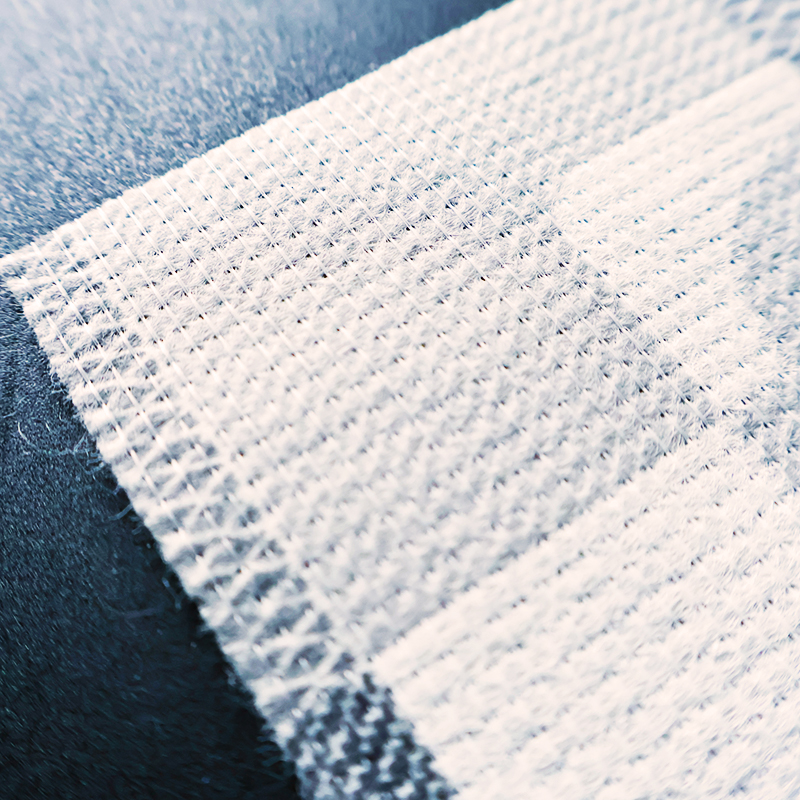
Modern manufacturing utilizes an advanced extrusion and bonding process. This creates a highly porous, multidirectional web. When you evaluate home textile nonwoven options, the structural benefits become obvious. The fibers intersect randomly. This random orientation provides incredible tear resistance from any angle.
These fabrics offer massive cost-efficiency. They reduce overall unit weight significantly. They also scale perfectly in continuous manufacturing lines. You get consistent yields without the bottlenecks of traditional weaving.
Standard polyester and cotton blends serve as the historical baseline. They offer predictable performance. However, they carry significant inherent risks. Tighter weaves trap heat aggressively. They also increase the unit weight of the final product.
When manufacturers try to increase breathability in wovens, they loosen the stitch. A looser stitch compromises tensile strength. The fabric becomes prone to shifting and tearing. You face a constant battle between durability and airflow.
Nonwovens consistently win in rigorous bill-of-materials (BoF) evaluations. They offer a superior balance of high porosity and consistent yield. They also boast lower raw material costs. Upgrading to engineered webs removes the historic compromises of older textiles.
Designing a mattress involves a distinct structural conflict. You want a breathable, highly flexible base. Simultaneously, you need rigid perimeter support. These two goals naturally fight each other during assembly.
The base fabric interacts directly with encasement foams. It also anchors heavy-duty edge coils. If the bottom material stretches too much, the perimeter fails. The edge coils will bow outward over time. You must engineer the perimeter carefully.
We use specific strategies to mitigate roll-off risks. You can utilize a highly breathable center zone. Meanwhile, the fabric anchor points must support robust mattress edge reinforcement. The perimeter needs absolute dimensional stability.
Assembly tolerances require extreme precision. Gluing breathable bases to edge structures is tricky. Adhesives can block airflow if applied recklessly. Stitching requires tough yarns that will not tear the porous web. You must align your fabrication methods with the material capabilities.
Regulatory baselines demand strict adherence. Mandatory safety standards guide every manufacturing decision. In the United States, CPSC 16 CFR Part 1632 and 1633 are absolute laws. You cannot fail these open-flame tests.
Historically, an intense breathability-safety paradox existed. Legacy fire socks suffocated airflow completely. Heavy chemical sprays retained heat. They created a dense, impenetrable barrier on the bottom. The mattress passed fire tests but slept incredibly hot.
Modern solutions eliminate this compromise. You can source exceptional flame retardant mattress fabric today. Engineers weave inherently flame-resistant fibers directly into the porous structure. Non-toxic silica and rayon blends perform beautifully. They stop fires while maintaining the vital open-cell structure.
FR Solution Performance Chart
Solution Type | Airflow Impact | Chemical Toxicity Risk | CFR 1633 Compliance |
|---|---|---|---|
Legacy Chemical Sprays | Severe Blockage | High | Variable |
Heavy Fire Socks | Moderate Blockage | Low | Pass |
Inherently FR Silica Blends | Zero Blockage | None | Pass |
Supplier trust metrics are non-negotiable. You must verify credentials before purchasing. OEKO-TEX® or CertiPUR-US® certifications guarantee safe chemistry. They protect your brand credibility. They also mitigate long-term liability risks.
Evaluating a supplier requires a strict procedural approach. You must assess their capacity for scalability. They need to maintain exact batch consistency across large-volume runs. Lead times must align with your production schedule.
Prototyping is incredibly important. You must request sample rolls immediately. Conduct physical compatibility testing with your specific foam densities. Test your standard adhesives on their materials. A theoretical match means nothing without physical validation.
Watch out for severe red flags during the vetting process:
Lack of independent third-party lab testing.
Opaque lists of flame-retardant chemicals.
Inconsistent GSM (grams per square meter) variances.
Refusal to provide detailed technical data sheets.
Your next step involves drafting exact technical specifications. Define your CFM requirements clearly. State your burst strength minimums. Present these demands explicitly during the RFP/RFQ phase.
Prioritizing a high-quality mattress support fabric is a vital strategic investment. It guarantees product durability. It improves sleep ergonomics dramatically. Ultimately, it protects your brand reputation from easily avoidable failures.
Combining airflow, edge integrity, and strict FR compliance is challenging. It requires selecting advanced engineered textiles. Legacy materials simply cannot meet modern performance demands. You must upgrade your base layer technology.
Procurement teams and discerning buyers should act now. Request comprehensive technical data sheets (TDS) today. Order material samples immediately. Begin physical compatibility testing to secure the best possible foundation for your mattresses.
A: Memory foam is naturally heat-retentive and incredibly dense. It absorbs body heat quickly. A breathable base acts as the primary exhaust system for the bed. It prevents internal thermal buildup. This continuous airflow prevents premature cellular breakdown, keeping the foam supportive and comfortable for years.
A: Not with modern materials. Current engineered fabrics weave inherently flame-retardant fibers directly into a porous structure. These advanced silica and rayon blends ensure strict CFR 1633 compliance. They achieve complete safety without restricting airflow or relying on harsh chemical sprays.
A: The base fabric acts as the structural anchor for all edge materials. A material with poor tensile strength will stretch excessively over time. This stretching causes the edge reinforcement to bow or collapse outward. A strong base keeps the perimeter perfectly aligned.
A: Yes, industrial-grade home textile nonwoven fabrics are highly durable. They are engineered for high multi-directional tensile strength. Their intersecting fibers resist tears and punctures effortlessly. They perform exceptionally well even when consumers drag them across abrasive wooden foundations.